
6 min read
How to get red wine, coffee, pet, and grease stains out of carpet
By Dan, owner & lead technician·Updated May 31, 2026
The first ten minutes matter more than anything a professional does later. Here's exactly how to handle the five spills we get called about most in NJ homes — plus an honest note on which stains, once they set, don't fully come out.
Short answer
For almost any spill: blot, don't rub, work outside-in, and use cool water — hot water sets protein and tannin stains. Wine and coffee take a dish-soap-and-vinegar mix, pet accidents need an enzyme cleaner, blood needs cold water only, and grease needs a degreaser. Bleach and dye-transfer stains are usually permanent.
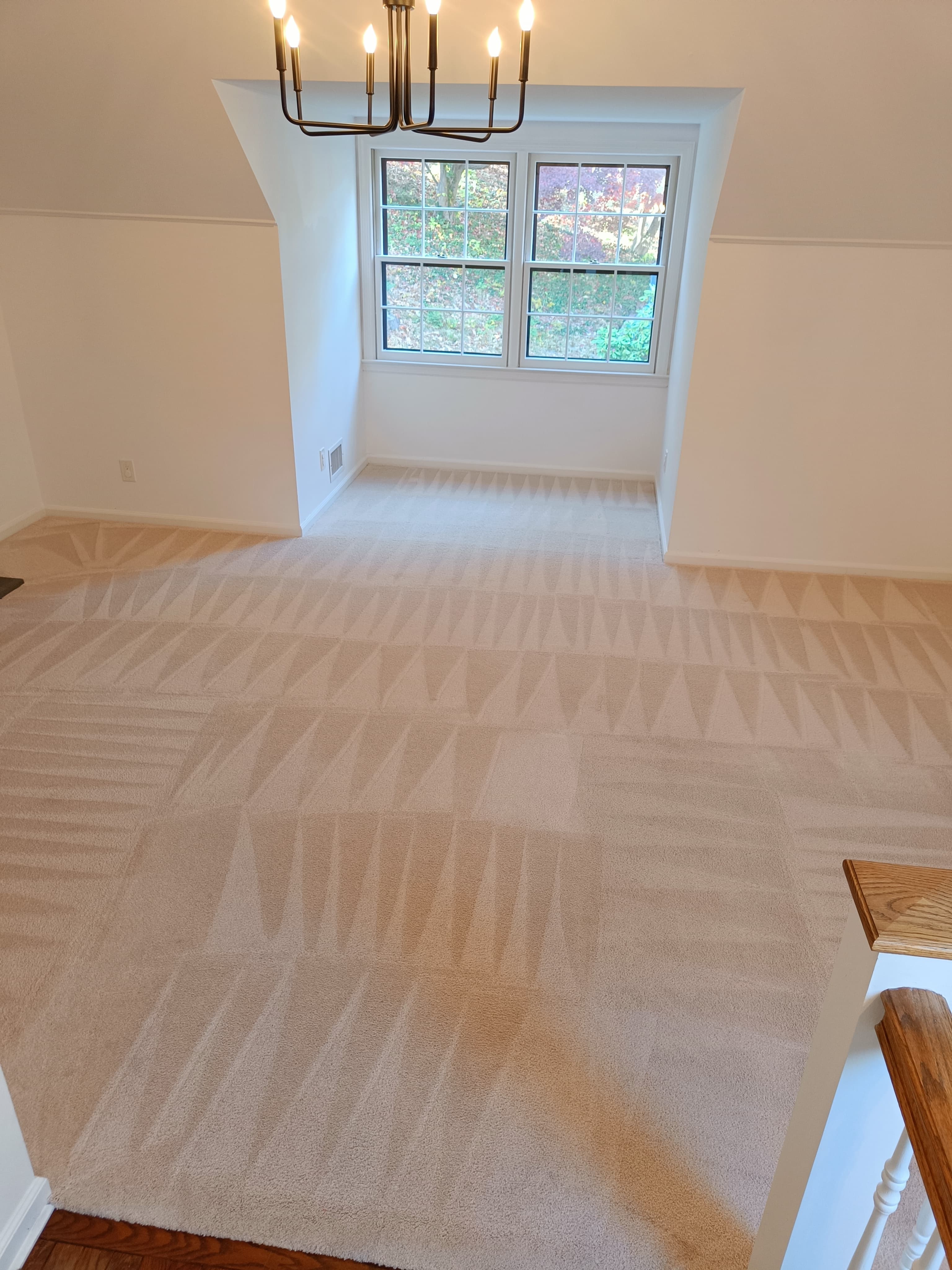
The one rule for every spill: blot, don't rub
Rubbing drives the spill deeper and frays the fibers, which leaves a fuzzy spot even after the color is gone. Always blot from the outside of the stain inward so you don't spread it.
And always test any cleaning solution on a hidden patch first — a closet edge or under a couch — to make sure it doesn't pull the carpet's color.
- Blot up as much liquid as you can with a clean white towel before doing anything else.
- Work outside-in so the stain doesn't grow.
- Cool water first. Hot water can set protein and tannin stains permanently.
- Never scrub with a brush on cut-pile carpet.
Red wine
Blot up the wine, then pour a little cool water on the spot and blot again to dilute it. Mix one tablespoon of dish soap and one tablespoon of white vinegar into two cups of cool water, apply a little at a time, and blot. Repeat — patience beats scrubbing here.
Skip the salt-and-club-soda myths if the wine has already dried; at that point it's a tannin stain that usually needs a professional tannin treatment.
Coffee and tea
Same family as wine — a tannin stain that leaves a yellow-brown cast if it dries. Blot, dilute with cool water, then use the dish-soap-and-vinegar mix. Coffee with cream adds a grease component, so you may need the grease step below too.
Pet accidents (urine)
Blot up as much as possible, then rinse with cool water and blot again. The smell is the real problem, and ordinary soap won't touch it — you need an enzyme cleaner that digests the urine proteins. Apply it, let it dwell the full time on the label, and blot.
If the spot keeps coming back or you can smell it on humid days, the urine has soaked into the pad. That's a job for extraction and sometimes pad replacement — see our guide on removing pet odor permanently.
Blood
Cold water only — heat cooks blood into the fiber and sets it for good. Blot with cold water, then a little hydrogen peroxide on a white cloth for stubborn spots (test for colorfastness first; peroxide can lighten some carpet).
Grease and oil
Grease needs a degreaser, not water — water just beads off it. A small amount of dish soap worked gently into the spot and blotted will lift most food grease. For set-in or large grease stains, a solvent-based spotter does better, and that's where a professional pre-treatment earns its keep.
When to stop and call us — and what's permanent
We'd rather you stop early than scrub a spot into a permanent fuzzy ring. Call when the stain is large, already dried, or keeps returning after it dries (a sign of wicking from the pad).
Honest truth: some stains are permanent. Bleach and many acne or benzoyl-peroxide products remove the dye, not just the stain — that color is gone. Old, set tannin and dye-transfer stains (a colored bath mat bleeding onto carpet) often can't be fully reversed. We'll always tell you what's realistic before we treat it.
Related service
Carpet Cleaningin Lyndhurst & nearby NJ →Commercial-grade steam cleaning with pH-balanced rinses and fiber-safe spot treatment. Most homes dry in 4–8 hours.
Carpet in your town
Free written quote
Text a photo, get the real price — before we ever drive over.
Carpet Cleaning starts at $169 (3-room starter package). Dan prices every job from photos, so the number you get is the number you pay — no surprise upcharges at the door. Fastest way: call or text (551) 205-5995.