
5 min read
Why your sofa still smells after cleaning — and how to fix it
By Dan, owner & lead technician·Updated June 15, 2026
We get this call a lot: someone cleaned their couch, it looked great, and a day later it smells musty — or worse than before. Nine times out of ten it isn't the surface fabric at all. It's water sitting in the foam and the cushion wrap where it can't dry. Here's what's actually happening and how to fix it for good.
Short answer
The smell is almost always trapped moisture in the cushion foam and padding, not the surface fabric. A DIY machine soaks the piece without pulling the water back out, so it sours as it slowly dries. The fix is a low-moisture pro extraction with fast, forced drying — and replacing foam that's already soured.
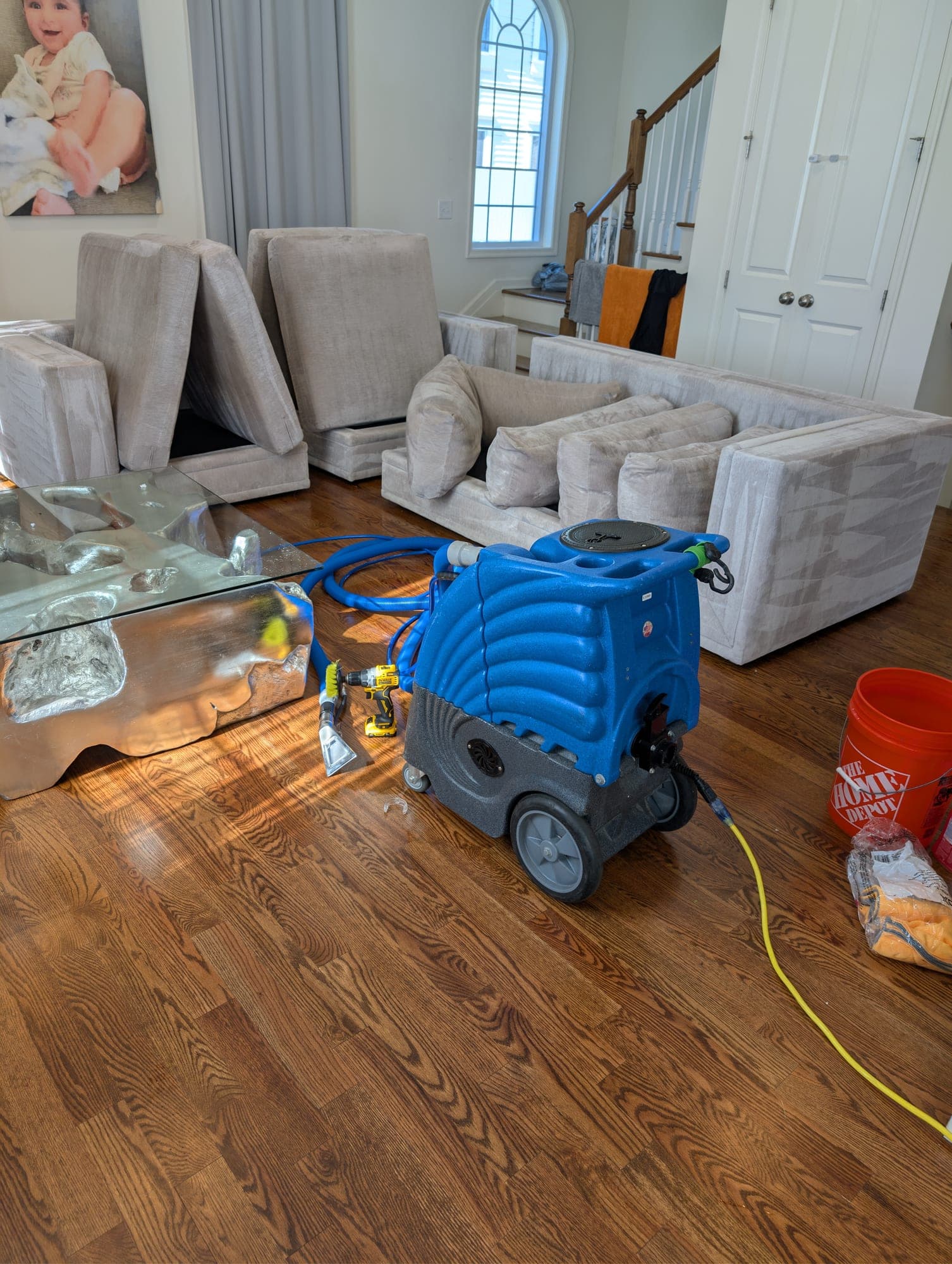
Surface odor vs. odor in the foam
There are two completely different problems that both smell bad, and telling them apart is the whole game. Surface odor sits in the fabric and the top layer of padding — smoke, cooking smells, a fresh spill. That kind usually clears with a proper clean because the cleaner can reach it.
Odor in the foam is deeper. The cushion core and the dacron wrap inside the cushion are like a sponge — once a liquid or a smell soaks all the way in, the surface can be spotless and the piece still reeks. If your sofa smells fine when you walk past but bad the moment you sit and compress the cushion, the odor is in the foam.
Trapped moisture is the number one cause
If the smell showed up after cleaning rather than before, the cause is almost always water that went in and didn't come back out. Upholstery foam holds a lot of moisture, and damp foam in a dark, unventilated cushion is exactly the environment that grows the mildew and bacteria you're smelling.
It usually takes a day or two to appear, which is why people don't connect it to the cleaning. The couch looked and felt dry on top, the water was sitting deeper, and as it slowly worked its way out it soured. That sour, basement-like smell is the tell.
Why DIY machines leave it damp
Rental and home upholstery machines are good at putting water and solution into a cushion and not nearly as good at pulling it back out. The suction is weak, the operator can't feel how saturated the foam is, and it's very easy to make pass after pass thinking you're cleaning when you're really just loading the foam with water.
Dish soap and a wet rag cause the same thing on a smaller scale — soak a cushion to chase a stain and you drive the spill and the moisture straight down into the core. The damage isn't the cleaning, it's the over-wetting with no way to extract it. Light moisture and strong extraction is the entire difference between a clean couch and a smelly one.
When the source is pet or body oil
Sometimes the smell was always there, just masked. Pet urine that reached the cushion deck soaks into the foam and crystallizes; add any moisture later and the smell reactivates, which is why a cleaned couch can suddenly smell like a pet that hasn't been on it in months. Body oil builds up the same way on headrests and arms and turns rancid over time.
These are deep, bonded smells, not surface ones. They need an enzyme treatment that breaks the source down chemically and time to dwell — a quick clean only rinses the top and leaves the source sitting in the foam to come back.
How a pro extraction actually fixes it
The professional fix is the opposite of soaking: a low-moisture process that uses just enough solution to lift the soil, then strong heated extraction that pulls the water — and the odor it's carrying — back out of the cushion instead of leaving it behind. For source smells we pre-treat with an enzyme deodorizer and let it dwell before extracting.
Then comes the part most people skip at home: forced, fast drying. Air movers pushing air through the cushions get the foam dry in hours instead of days, so there's no damp window for anything to sour in. Clean, then dry it fast and completely — that sequence is what keeps the smell from coming back.
The honest limit: when foam has to be replaced
Here's the part nobody likes to say. If foam has been soaked and soured repeatedly — a long-standing pet problem, a flood, a cushion that sat wet for weeks — the smell can be bonded so deep into the core that no amount of cleaning fully removes it. At that point the foam itself is the problem, and the real fix is new cushion inserts, which an upholsterer or the cushion maker can supply.
We'll tell you straight when we think you're there rather than charge you for a clean that won't hold. Usually it doesn't come to that — most after-cleaning smells are trapped moisture, and a proper extraction with fast drying clears them. But when the foam is done, it's done, and a cushion swap is cheaper and more honest than chasing it.
Related service
Upholstery Cleaningin Lyndhurst & nearby NJ →Microfiber, polyester, olefin, cotton blends, linen, and viscose. Colorfastness tested, low-moisture extraction, even drying.
Upholstery in your town
Free written quote
Text a photo, get the real price — before we ever drive over.
Upholstery Cleaning starts at $139 (per sofa). Dan prices every job from photos, so the number you get is the number you pay — no surprise upcharges at the door. Fastest way: call or text (551) 205-5995.