
6 min read
Wool and Oriental rugs: what's safe to clean at home, and what isn't
By Dan, owner & lead technician·Updated June 15, 2026
A good wool or hand-knotted rug can outlive the person who bought it — if it's cared for right. The trouble is that the things people reach for to clean a carpet are often exactly what damages a fine rug. Here's the honest line between safe home care and the point where a rug needs to leave the house.
Short answer
Vacuum wool rugs regularly and blot spills with cool water — never hot water, never bleach or oxy cleaners, and never soak a viscose rug. Hand-knotted, antique, and viscose rugs should be dusted and immersion-washed off-site; surface machine-cleaning is what causes browning, dye-bleed, and fringe damage.
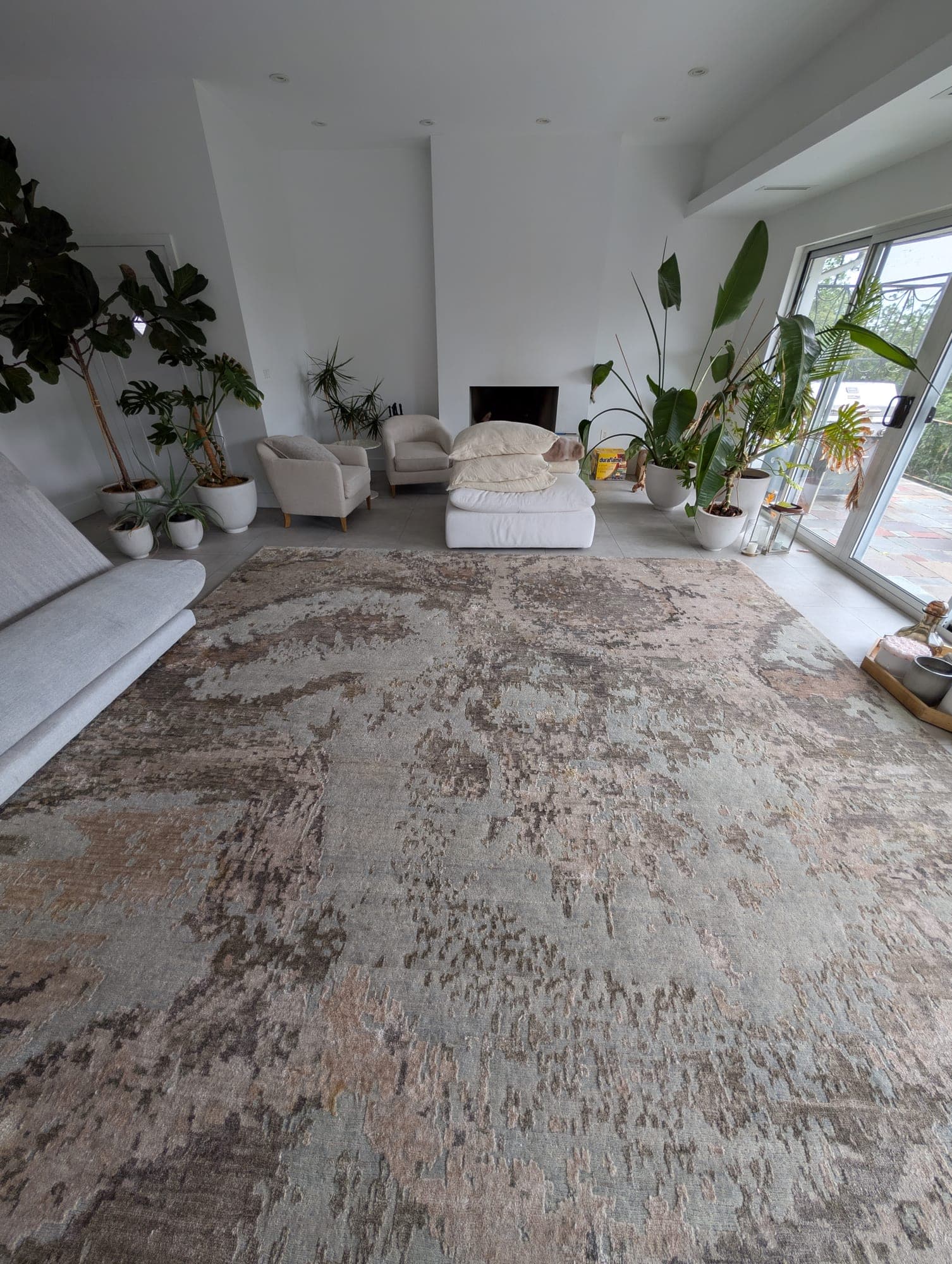
First, know what you're standing on
Rugs fall into a few families, and they don't clean the same way. Wool is the workhorse — resilient, naturally stain-resistant, very forgiving if you don't abuse it. Synthetics (polypropylene, nylon) are the most washable and the least fussy. Viscose — also sold as “art silk,” rayon, or bamboo silk — looks luxurious and behaves terribly with water. Real silk and antique hand-knotted rugs are in a class of their own.
Not sure which you have? Wool feels slightly coarse and springs back when you pinch the pile; a burnt wool fiber smells like hair. Viscose feels silky-soft, mats easily, and turns yellow-brown where it gets wet. If you can't tell, treat it as delicate until someone who can tell looks at it.
Safe home care for a wool rug
Vacuum regularly, but turn the beater bar off or use suction-only — a spinning brush frays wool over time and tears at fringe. Rotate the rug a couple of times a year so foot traffic and sun fade evenly instead of wearing one path.
For spills, blot immediately with a clean white towel and cool water. Work from the edge inward. Wool's natural lanolin gives you a real head start — most fresh spills lift with water alone if you get to them fast. What you don't do is just as important as what you do.
What never to use on a fine rug
A short list of things that quietly wreck a good rug — most of them live under your kitchen sink:
- Hot water — it can set stains and, on some rugs, loosen the dyes.
- Bleach or “oxy” cleaners — they strip wool's color and weaken the fiber.
- A rented carpet machine — it over-wets the rug and drives water into the foundation, where it wicks dye and grows mildew.
- Heavy scrubbing — it distorts the pile and can permanently fuzz the surface.
- Any water at all on viscose — even blotting a spill can leave a brown halo.
Viscose: looks like silk, behaves like cardboard
Viscose deserves its own warning. It's cellulose — basically processed wood pulp — and it loses strength when wet and yellows as it dries. A glass of water knocked onto a viscose rug can leave a permanent brown mark, and the well-meaning scrub that follows usually makes it worse.
If you have a viscose or “bamboo silk” rug, the safest home rule is: keep it dry, vacuum gently, and hand any actual spill or stain to someone who works with the fiber. It can be cleaned — it just has to be done with a conservative low-moisture process and controlled drying, not a wet wash.
Why the good ones get washed off-site
Hand-knotted, antique, wool, and viscose rugs get cleaned off-site for a reason. First the rug is dusted — dry soil is beaten and vibrated out of the foundation, and a surprising amount of a rug's weight is grit a vacuum never reaches. Then the dyes are tested for stability, the rug is washed flat with a fiber-appropriate shampoo and a hand-controlled rinse, and it's dried flat under airflow so the shape and colors hold.
None of that happens with a wand on your living-room floor. That's the whole case for pickup-and-delivery on a rug that matters: it gets dusted, immersion-washed, and flat-dried the way the rug was built to be cleaned.
Fringe, curling, and that musty smell
On a hand-knotted rug the fringe is the foundation — the knotted ends of the rug itself — not a decoration sewn on. A fraying end can let the rug unravel, so it's worth securing early. Edges that cup or curl usually mean the sizing has broken down; an off-site wash blocked flat under tension resets most of that.
A musty or sour smell means moisture got deep into the backing and stayed there — from a pet accident, a damp basement, or being stored rolled up wet. Surface deodorizer only masks it. A full immersion wash and controlled dry is what actually clears it, assuming the foundation hasn't already rotted.
When to bring in a pro
Any hand-knotted, antique, silk, or viscose rug; any wool rug with a pet accident that reached the backing; any rug with a musty smell or a stain you can't lift with cool water and patience — those are the off-site jobs. We inspect and photograph on pickup, test the dyes before any water touches it, and there's free pickup and delivery in Lyndhurst.
Synthetic rugs are the exception — a polypropylene area rug usually cleans up fine on-site. When in doubt, a quick photo by text and we'll tell you honestly whether it's an on-site job, an off-site wash, or something you can handle with a towel.
Related service
Area Rug Cleaningin Lyndhurst & nearby NJ →Synthetic rugs cleaned on-site; wool, hand-knotted, and viscose go off-site for an immersion wash. Free pickup and delivery in Lyndhurst.
Rugs in your town
Free written quote
Text a photo, get the real price — before we ever drive over.
Area Rug Cleaning starts at $89 (per area rug). Dan prices every job from photos, so the number you get is the number you pay — no surprise upcharges at the door. Fastest way: call or text (551) 205-5995.